Cancer treatment can be complicated and expensive, which can contribute to the cost of a traditional Private Medical Insurance plan that covers it. That can lead to companies only having PMI for senior management.
Equipsme plans are designed to open-up health insurance for more people in more businesses – and in order to do so one of the things we’ve chosen to exclude is cancer treatment. Instead, we focus on early diagnosis.
With most forms of cancer, fast diagnosis is the key to catching it and ultimately ensuring better outcomes. While survival rates in the UK depend heavily on the type of cancer and the stage at diagnosis, generally, patients diagnosed at Stage 1 or 2 have higher survival prospects - often exceeding 90% for highly treatable cancers. Left unchecked to progress to Stage 4, survival drops dramatically across the board.
So specialist consultations, diagnostic tests and scans up to the point of cancer diagnosis ARE included in our Level 3, 2 and 1 plans (assuming the condition or symptoms aren’t otherwise excluded – for instance pre-existing or chronic conditions). Upon diagnosis, people would then transition back to the NHS for their treatment.
But what happens AFTER you get that diagnosis? How do you actually get back to the NHS for your treatment?
For many people, hearing the news they have cancer will be extremely worrying and overwhelming. And the last thing we want you to have to think about is how to arrange the transition between private and NHS care.
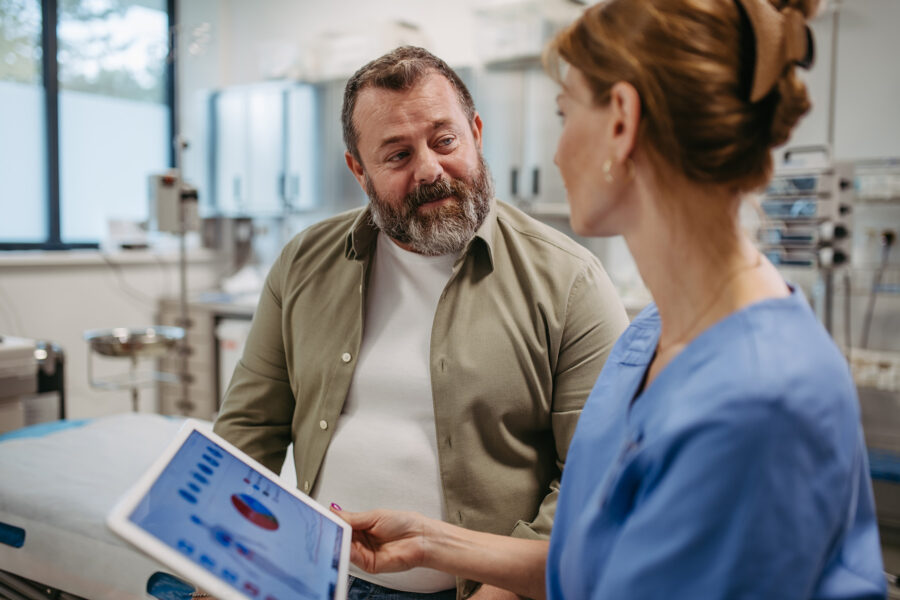
So we talked to our GP adviser Dr Mark - a practising NHS GP partner for 16 years – to answer your key questions, and hopefully put your mind at rest.
Hi Dr Mark! How do you get from a private Doctor to an NHS doctor?
“It’s tempting to think that private medicine is something that happens with these doctors over here, and that NHS medicine happens with those doctors over there – but that’s just not the case.
“Very often doctors will have both private and public lists of patients, and will work across several different hospitals to see them.
“The days when private and NHS care are completely separate are gone, and if you are diagnosed with something under your private medical insurance which is also treated by the NHS, you can choose to move back to the NHS at any time.”
How does transitioning back to the NHS work in practice?
“There are two ways this can happen. Either your consultant will put you on the NHS list, which can often be their own list, or ask your GP to start the process at your local NHS unit.
“The decision is based on geographic considerations and the speed with which you will be seen, meaning that there could be a wait depending on NHS resources at the time, but your consultant should be able to steer you through the process.
What are the advantages of going back to the NHS?
“People should always be using the best care option they have. Now, when it comes to cancer treatment, the best care option is more often than not the NHS itself.
“Cancer of any sort is a complicated disease that often involves multi-disciplinary teams to tackle it, from surgeons to radiologists, imaging specialists to after-care physiotherapists, immunotherapy to histotripsy - and many more teams and treatments. A private hospital may not have all of those resources. NHS cancer units do, and the quality of multidisciplinary decision-making is very high.
“What’s more, after the point of diagnosis the NHS is still incredibly successful at treating cancer. Don’t do it down - in a health crisis, this is the team you want in your corner.
I feel weird about skipping the queue – does the NHS mind that?
“From my perspective as an NHS doctor, it’s all about the patient.
“If people are able to invest in their own health to fast-track an intervention they need – or if they have insurance that can help them do the same thing – that absolutely means one less person in the NHS queue. Which at the end of the day benefits everyone.
Do private and public systems actually work together? Or are they in competition?
“The fact is that to preserve the NHS and the good it can do, private and public healthcare have to work together – and they generally do. Surprisingly, well in fact, because the two systems are already interlinked.
“I would definitely advise my patients not to be afraid to use both in any combination that works for them to look after their health, and get the attention they need when they need it.”
Further reading:
All our information is desk-based research from credible sources only, including the NHS and medical/disease charities.
Author: Abi Stevens
Date created: June 2026